Threshold
There are certain rare materials that can only been found from the areas where thresholds are open, from the creatures that came through the thresholds, and during special events.
Threshold Tokens
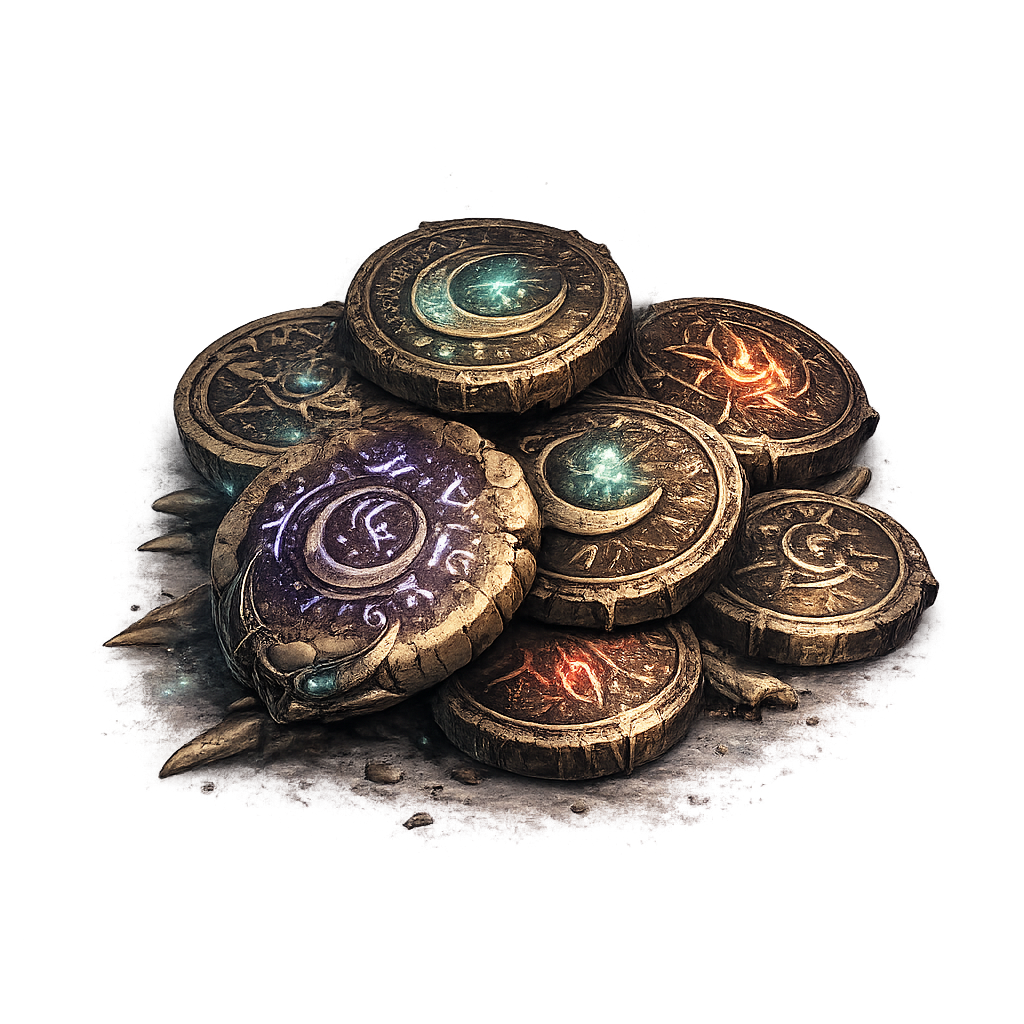

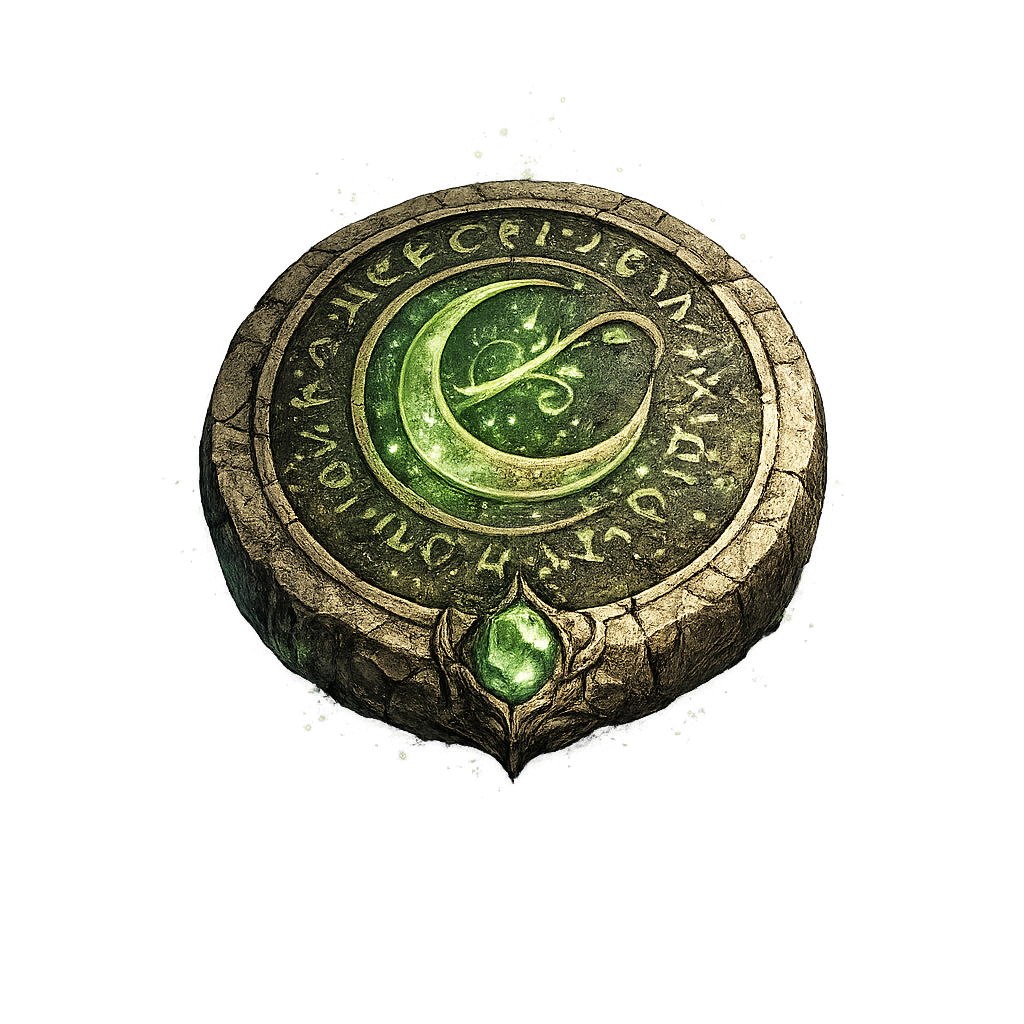
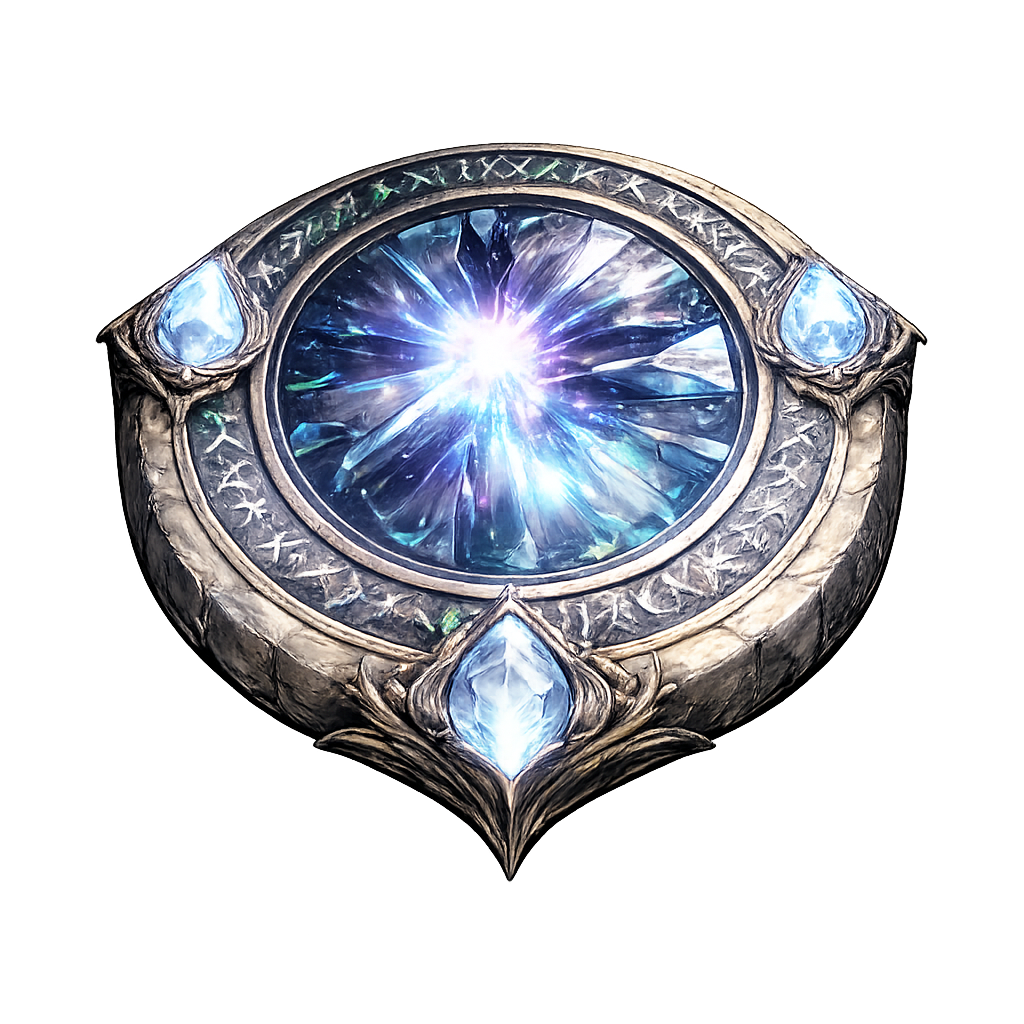
Threshold Tokens are small, peculiar objects recovered from the remains of creatures born or shaped by active Thresholds. No two are ever quite alike, some appear as worn coins of unfamiliar make, others as bone discs etched with shifting symbols, or fragments of metal that hum faintly when held.
Despite their varied forms, all Threshold Tokens share a common trait: they carry a trace of Veil resonance, a lingering imprint of the realm from which they originated.
Use in The Crossroads
Within The Crossroads, these tokens have become an accepted form of currency—particularly in dealings involving the supernatural.
Certain factions, traders, and practitioners accept them in place of coin, especially when dealing in rare materials, services, or information tied to the Veil.
Their origin often influences their value. Tokens from more volatile or dangerous Thresholds tend to carry greater worth.
Closing Note
Threshold Tokens are not minted. They are left behind.
And every one of them carries the quiet question: what crossed over to create it?


Veilwood
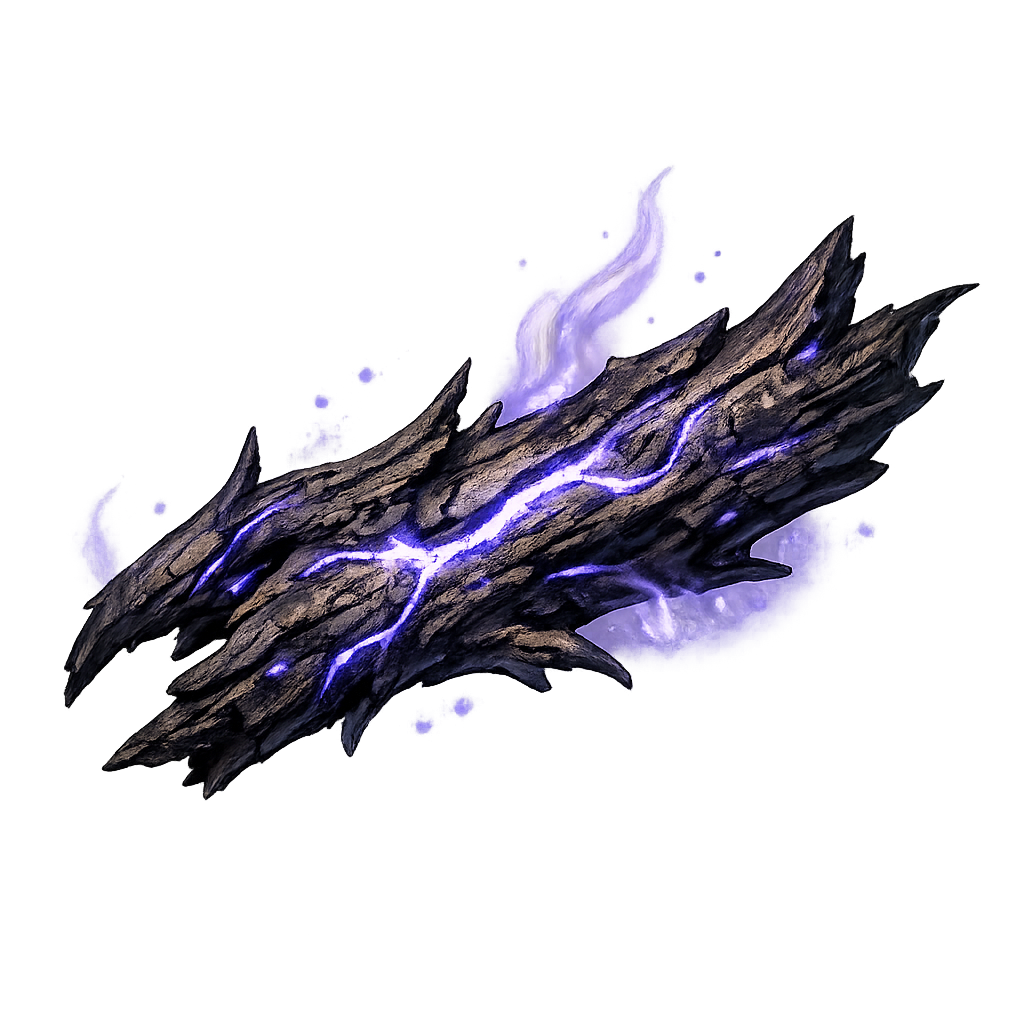
Found only within the unstable radius of an active Threshold, Veilwood is not cut from living forests, nor gathered from fallen groves. It manifests where the Veil thins, where the waking world presses too closely against the spirit-realms. In such places, wood appears as though it has been remembered into being: roots half-formed in ash, branches twisted in impossible geometries, bark etched with faint, shifting impressions like fingerprints left by something unseen.
To the untrained eye, it resembles blackened driftwood or charred timber. But held close, one finds it is neither brittle nor dead. It is unnaturally light, faintly warm or cold depending on the Threshold from which it was taken, and threaded through with dim, pulsing veins of pale light, like a heartbeat caught between worlds.
Properties
Veilwood is not passive material. It is reactive to presence.
When carried by the living, it may hum softly, an almost inaudible resonance felt more in the bones than heard.
When brought near a Threshold, it often responds, warping slightly, bending toward the tear in reality like iron to a magnet.
In the hands of the spirit-attuned, it can serve as a conductor of Veil energies, amplifying rituals, stabilising bindings, or, if mishandled, widening the very fractures it was meant to contain.
It does not rot in the traditional sense. Instead, it fades. Given enough time away from a Threshold, Veilwood loses its glow, its weight returns, and it becomes little more than dark, inert timber, its memory of the Veil slowly forgotten.
Uses
The Wardens prize it for crafting binding tools, lantern frames, and warding structures capable of interacting directly with spirit-realm energies.
The Veilwood is also used to make other valuable tools by those that know how.
Warnings & Folklore
“If the wood remembers the Veil, then mind it does not remember you.”
Prolonged exposure to raw Veilwood has been associated with:
Auditory echoes (footsteps, whispers, distant calls)
A subtle pull toward nearby Thresholds
Old hands advise never to burn it. Flames fed by Veilwood are said not to give heat; but to give vision.
Cold Iron
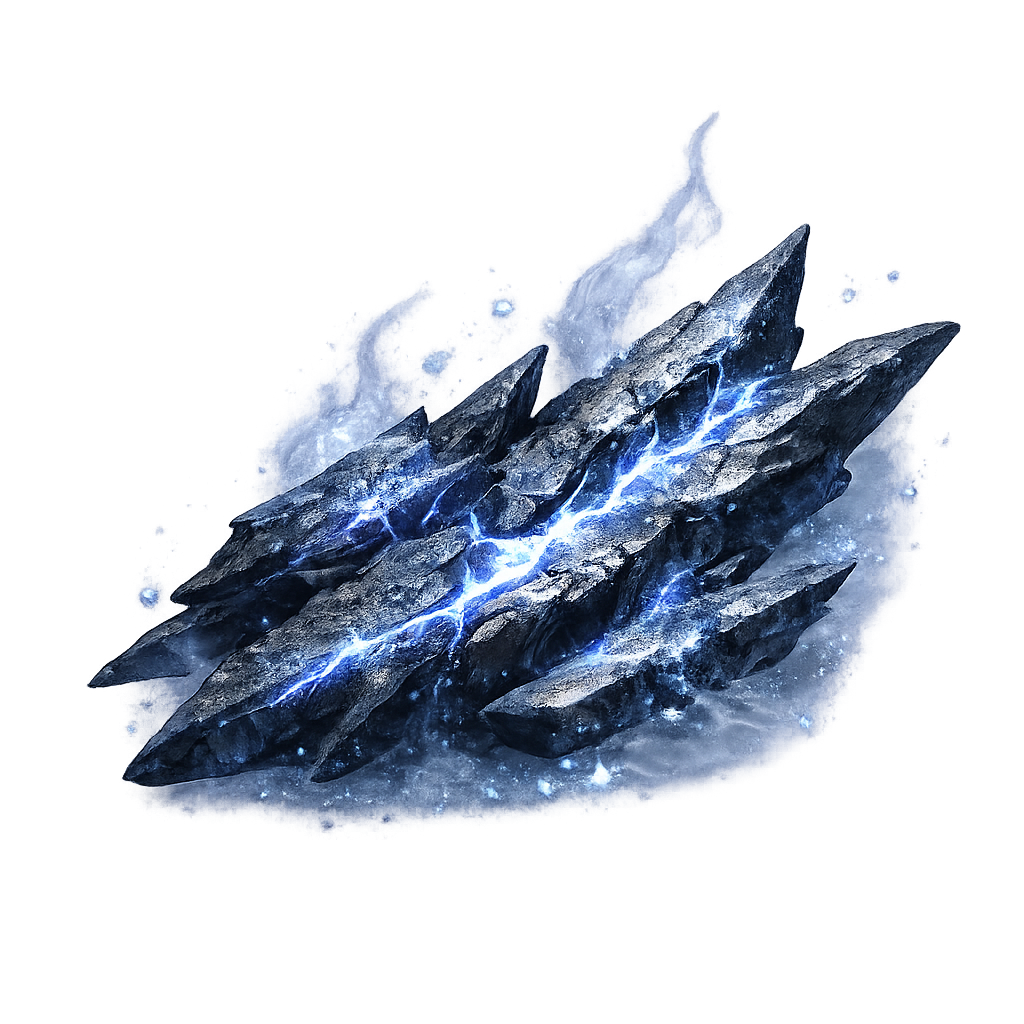
Cold Iron is drawn from the places where the world forgets its warmth; where the Veil presses close enough that heat, time, and motion falter. Within the radius of an active Threshold, veins of this metal appear embedded in stone that does not quite belong to the waking world. It is not mined in the traditional sense; it is unearthed from fractures where reality has cooled and hardened around something older with special pickaxes with Veilwood handles.
At first glance, it resembles dark iron ore; dull, grey-black, and heavy. But to the touch, it is unnaturally cold, not with the chill of weather, but with an absence of heat entirely. Frost gathers along its edges even in summer air, and breath drawn near it fogs as though in winter.
Properties
Cold Iron is defined not by what it is—but by what it denies.
It resists the Veil. Spirit-energy falters against it, weakening illusions, dampening manifestations, and anchoring unstable boundaries.
It holds a perfect stillness; vibrations dull against it, and even sound seems quieter in its presence.
It does not take enchantment easily. Where other materials channel or amplify, Cold Iron instead nullifies or grounds.
When forged, it requires no great heat to shape, only persistence. The metal yields slowly, as though remembering an older state, but once set, it becomes unyielding and absolute.
Use
Cold Iron is among the most tightly controlled materials in The Crossroads.
The Wardens employ it in bindings, manacles, and anchor-points, particularly when dealing with entities that slip between realms.
The Oathkeepers authorise its use in weapons and restraints, as it can disrupt spirit-cast abilities and suppress Veil-born influence.
It is often set into Threshold stabilisers, driven into the ground or built into frameworks to prevent further tearing of the Veil.
Even small amounts are valuable. A single nail of Cold Iron, properly placed, can quiet a restless space.
Warnings & Folklore
“Fire shapes the world. Cold Iron remembers when there was none.”
Handling Cold Iron for extended periods has been known to cause:
Numbness in the hands and extremities
A dulling of emotional response
A growing sense of detachment from the Veil, and, in rare cases, from other people
There are stories of Wardens who carried too much of it, too often, and found themselves unable to hear the Veil at all, cut off from the very thing they were sworn to guard.
Closing Notes
Cold Iron is not merely metal, it is refusal made tangible.
Where Veilwood remembers, Cold Iron denies. Where the Threshold opens, it closes.
To wield it is not to command power, but to draw a line, and dare anything beyond it to cross.
Veil Dust
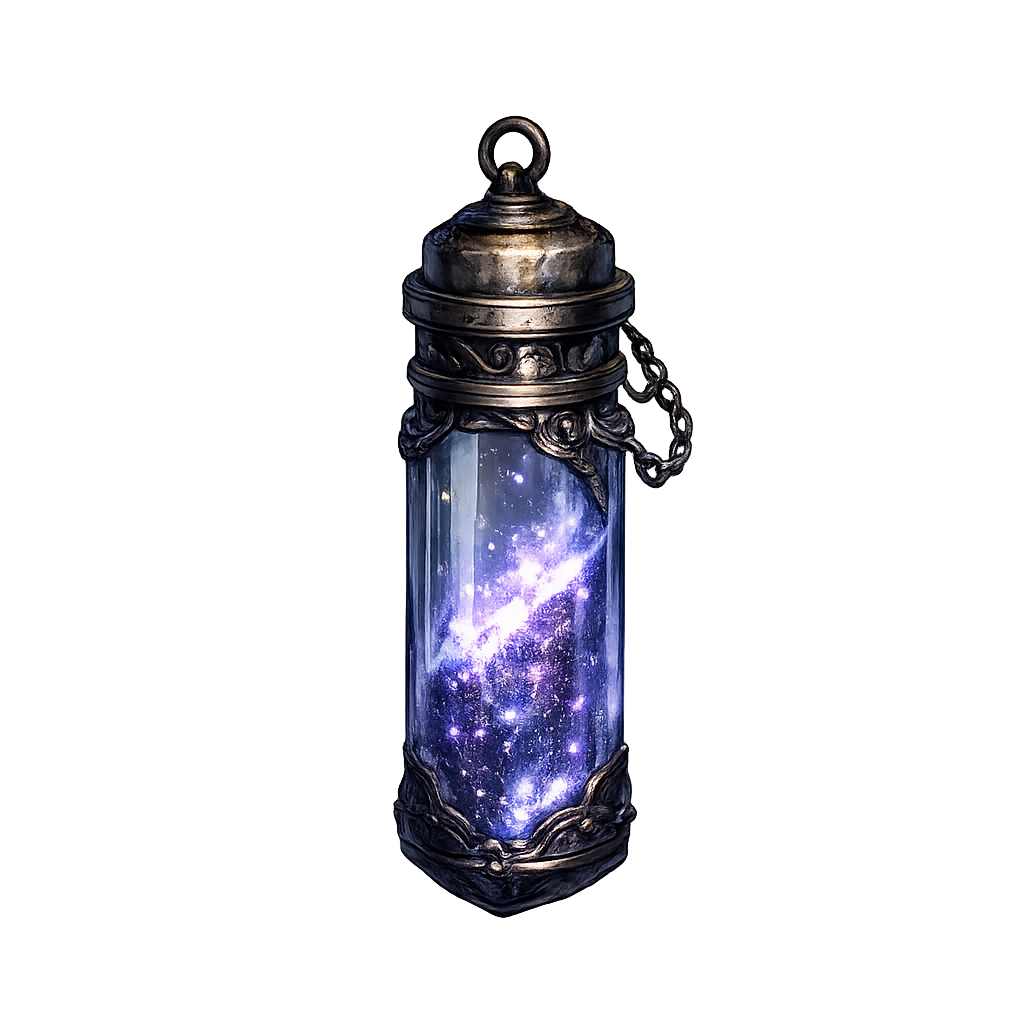
There are places where the Veil tears. There are places where it frays.
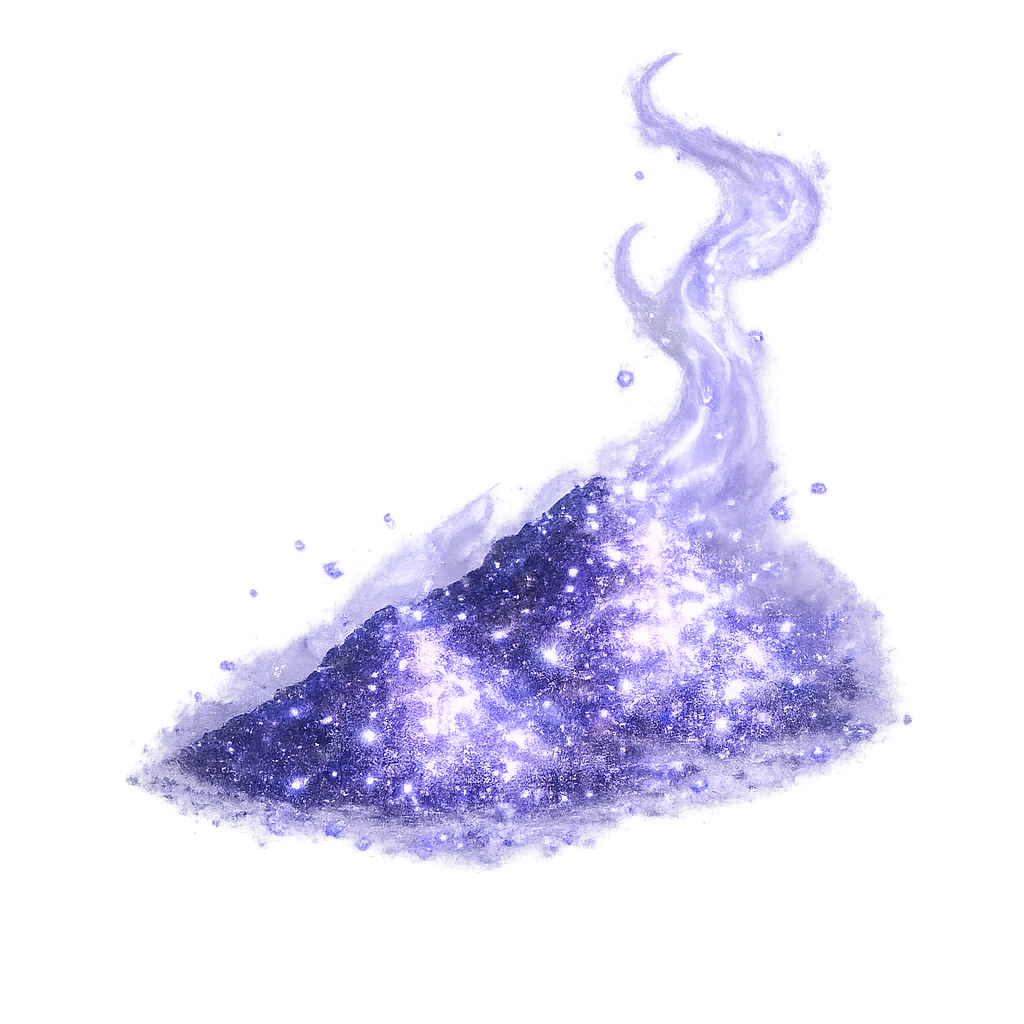
Veil Dust is what remains when the boundary between worlds begins to come apart, not in violence, but in slow unravelling. Within the radius of an active Threshold, the air itself may grow thick with it: a fine, luminous particulate that drifts like ash, glimmers like frost, and settles upon surfaces without ever fully resting.
It is not mined, nor cut, nor harvested in any conventional sense. It is collected, carefully, patiently, from the margins of the Threshold, where the Veil sheds itself in motes too small to hold form, yet too potent to ignore.
Properties
Veil Dust is the Veil in its most fragmented state: pure, unbound, and dangerously receptive.
It carries a faint, shifting glow: colours often reflecting the nearby spirit-realm (ashen greys from the River of Ash and Bone, foxfire hues from the Twilight Pathways, pale golds from the Luminous Expanse, forest greens from the Umbral Wilds, and silvered hues from the Shattered Mirror).
When disturbed, it moves against natural currents, drifting toward warmth, breath, or thought.
It is highly reactive to intention. Left inert, it remains stable. But when introduced to ritual, heat, or liquid, it readily binds to whatever pattern is imposed upon it.
In raw form, it is unpredictable. In the hands of a skilled practitioner, it becomes one of the most versatile reagents known in The Crossroads.
Collection & Handling
Gathering Veil Dust is a practiced art.
It is typically captured in sealed glass vials, often lined with wax or treated with Veilwood shavings to prevent premature activation.
Direct skin contact is discouraged; the Dust has a tendency to cling and seep, leaving behind faint traces that may linger for days.
Exposure to open flame causes it to flare briefly, burning not with heat, but with vision, producing fleeting images or impressions tied to the Threshold it came from.
Collectors often work in silence. It is said that loud voices or strong emotion can cause the Dust to scatter, or worse, to gather where it should not.
Use in Potions & Brews
Veil Dust is the cornerstone of alchemical practice in The Crossroads.
When introduced into liquid mediums, it acts as a binding agent between the physical and the unseen, allowing brews to carry effects beyond simple chemistry.
Common applications include:
Stimulant Draughts: Enhancing stamina, awareness, or reflex by briefly aligning the body with Veil energies.
Restorative Tonics: Accelerating healing by drawing upon the regenerative aspects of certain spirit-realms.
Warding Brews: Imbuing the drinker with temporary resistance to spirit interference or possession.
Perception Elixirs: Granting fleeting glimpses beyond the Veil—seeing echoes, spirits, or hidden pathways.
The outcome depends heavily on what the Dust is mixed with, and where it was gathered. Dust from the Shattered Mirror behaves very differently than that drawn from the Umbral Wilds or the River of Ash and Bone.
Warnings & Folklore
“Do not breathe too deeply where the Veil is shedding. It may learn the shape of your lungs.”
Improper handling or overexposure may result in:
Heightened sensitivity to Thresholds and spirit presence
Vivid waking visions or auditory echoes
Temporary loss of distinction between waking world and Veil-bound impressions
There are recorded cases of individuals becoming “Dust-touched”; their senses permanently altered, their perception never fully returning to the mundane.
Closing Note
Veil Dust is not merely a resource, it is possibility reduced to powder.
Every mote carries the echo of a world just beyond reach, waiting to be shaped, consumed, or unleashed.
To brew with it is to take the Veil into oneself, and trust that what answers back will be something you can survive.
Shimmer Sand
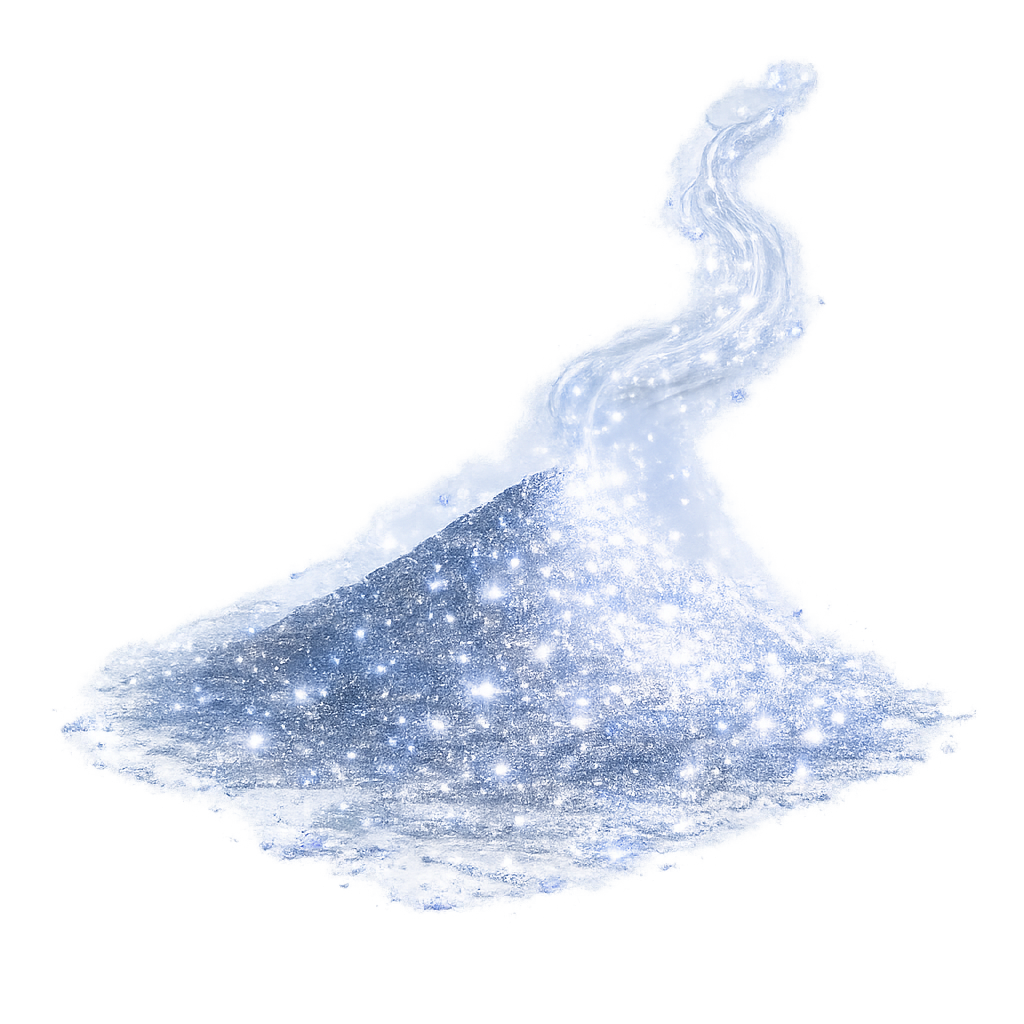
There are Thresholds that tear. There are Thresholds that bloom. And there are those that erode.
Shimmer Sand is what remains when a Threshold has lingered too long in one place—when the Veil does not break, but instead wears the world down grain by grain. Stone softens, structure loosens, and over time, the solid becomes particulate. What is left behind is not ordinary sand, but a fine, luminous scatter of grains that catch light where none should exist.
It gathers in drifts at the edges of active Thresholds, often forming shallow beds that glimmer faintly even in darkness. Each grain appears smooth and pale at a glance, yet when disturbed, it refracts colour in impossible ways—like light passing through something that is not entirely there.
Properties
Shimmer Sand exists in a state of quiet instability—matter caught between forms.
Each grain holds a faint iridescent sheen, shifting between hues depending on angle, light, and proximity to the Veil.
When poured or scattered, it does not fall entirely as expected—some grains lag behind, drifting as though suspended in thinner air.
It produces a soft, almost crystalline sound when moved, like distant chimes carried on wind.
Most notably, Shimmer Sand has a tendency to blur boundaries—not tearing them open, but softening their edges.
Interaction with the Veil
Where Cold Iron denies and Veilwood conducts, Shimmer Sand dissolves distinction.
Spread across a surface, it can make the line between solid and unseen less certain, allowing faint impressions of the spirit-realms to bleed through.
When cast into the air, it briefly reveals hidden movements, footprints, or passing entities, clinging to what cannot normally be seen.
Use in The Crossroads
Shimmer Sand is a specialised tool, valued more for precision than power.
The Wardens use it to trace disturbances, casting it across ground or through the air to reveal unseen tracks, echoes, or residual Veil activity.
The Oathkeepers authorise its use in investigations where truth is obscured, particularly in cases involving illusions or Echoed interference.
Among practitioners, it is used in ritual circles and boundary work, softening rigid lines to allow controlled interaction with the Veil.
It can be slowly heated and turned into a special glass, used to create vials to hold potions and brews, as well as used to contain Veil Dust safely.
It is also occasionally incorporated into Veil Dust brews, where it enhances perception-based effects, though such mixtures are notoriously unstable.
Warnings & Folklore
“Scatter it, and you may see the truth. Breathe it, and the truth may see you.”
Improper handling can lead to:
Distorted depth perception and spatial awareness
Visual echoes, seeing movement where none exists
A lingering sense that something is just out of sight
There are tales of those who worked too long with Shimmer Sand, who began to lose certainty in what was real, not because reality changed, but because the line between it and everything else had worn too thin.
Closing Note
Shimmer Sand is not force, nor memory, nor denial. It is erosion made visible.
Where it gathers, the world is not broken. It is simply no longer sure of its own shape.
Bloodstone
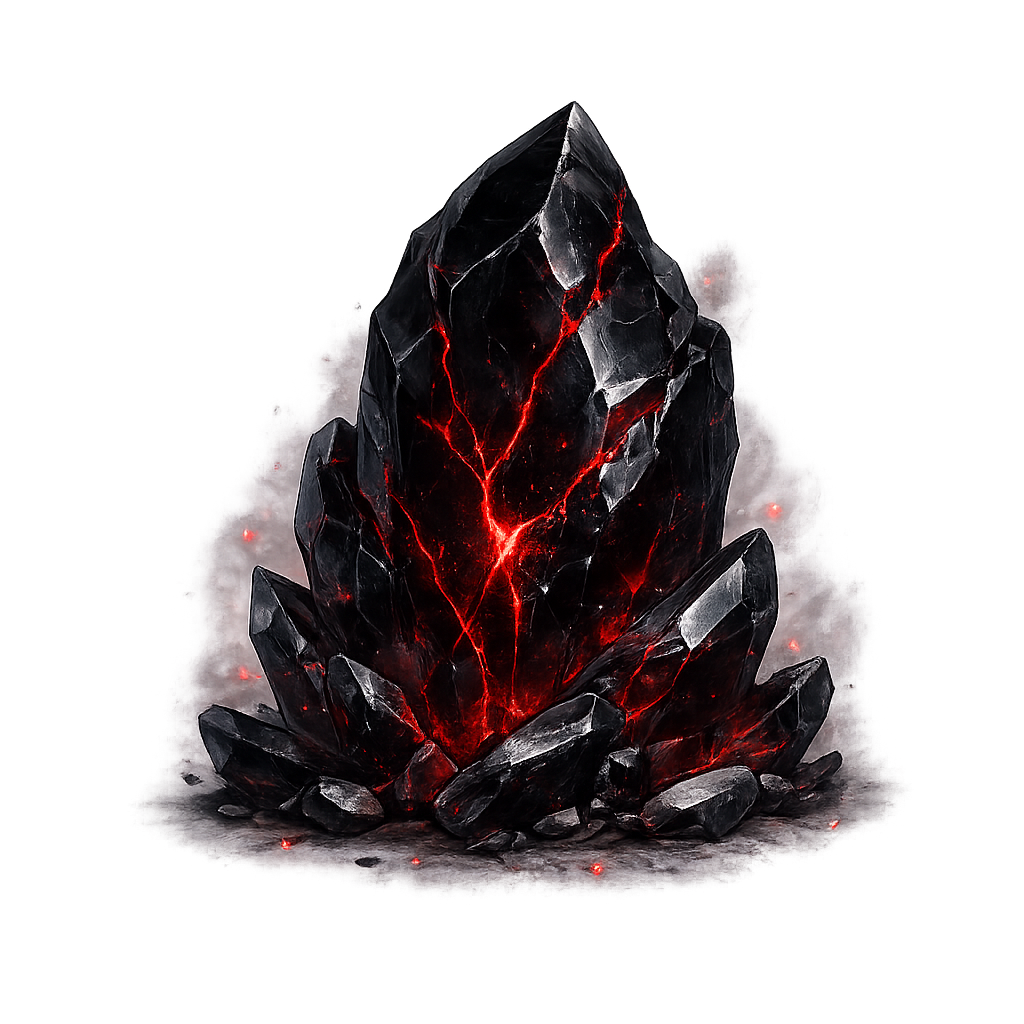
Bloodstone is not formed by pressure or time, but by remembrance.
It is found only at those rare and dangerous Thresholds that bleed into the River of Ash and Bone, where death, memory, and spirit-binding currents press against the waking world. There, within blackened earth or embedded in brittle stone, Bloodstone appears as dark, glass-like crystal, deep crimson to near-black, shot through with slow-moving veins that resemble suspended blood.
To the touch, it is neither warm nor cold, but carries a faint, rhythmic pulse, as though echoing a heartbeat long since stilled.
Properties
Bloodstone is a vessel of memory and hunger intertwined.
Within each piece are trapped impressions; fragments of final moments, echoes of passing souls, or the residue of lives drawn into the River.
When held, it may stir faint sensations: a distant heartbeat, a breath not your own, or the weight of something watching from beneath the surface.
In darkness, its inner veins glow dimly, shifting like slow-moving currents beneath ice.
Unlike Veilwood or Shimmer Sand, Bloodstone does not react to intention alone; it responds to life force.
Use Among the Umbrith Pact-Vampires
To the Umbrith-bound, Bloodstone is of profound value.
It is used to store and refine blood essence, allowing a vampire to preserve sustenance without immediate decay.
In ritual, it acts as a conduit to the River, strengthening pacts, deepening control over hunger, and stabilising the fragile balance between life and death within them.
Some craft it into rings, pendants, or embedded reliquaries, worn close to the body where it can quietly feed and regulate their condition.
It can also be crafted into a protective ring that allows them to walk under the sun’s otherwise harmful light.
Warnings & Folklore
“Do not listen too long to a stone that remembers dying.”
Prolonged exposure can lead to:
Heightened hunger or blood fixation
Intrusive visions; moments that are not your own
A creeping sense of being observed from within the stone itself
There are whispered accounts of Bloodstones that grow over time, fed not by the River; but by those who carry them.
Closing Note
Bloodstone is not merely a resource, it is a fragment of the River made solid.
To hold it is to stand at the edge of death’s current, feeling its pull not on the body but on the soul.
Veilleaf
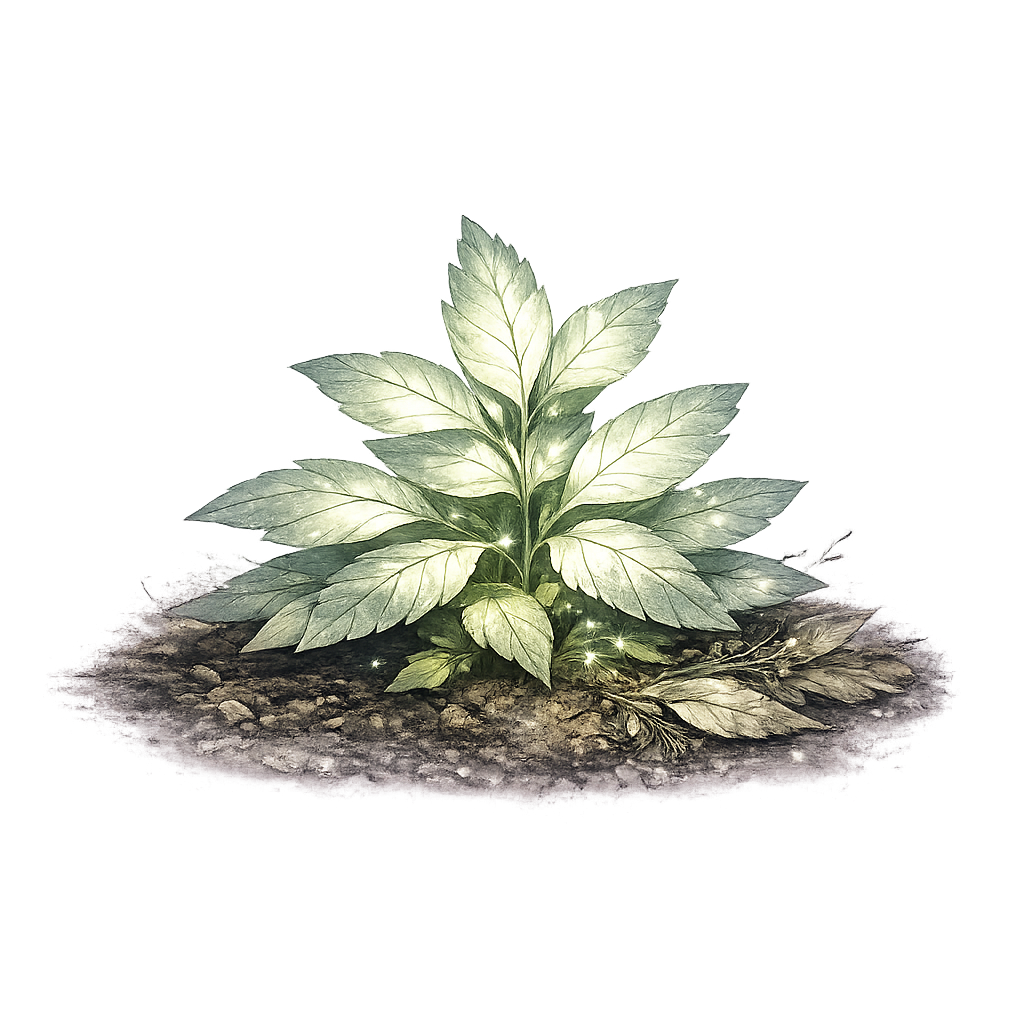
Veilleaf is a rare and delicate herb that takes root only where the Umbral Wilds press against the waking world, along the quiet edges of active Thresholds where nature and spirit exist in uneasy balance. It does not grow in abundance, nor does it appear in the same place twice for long. Instead, it emerges in small, fleeting clusters, as though testing the boundary before fading once more into the Veil.
Its leaves are thin and slightly translucent, tinted a muted silver-green, with faint, luminous veins that shift subtly when caught in the light. Even when dried, the leaves retain a soft shimmer, like frost clinging to something still alive beneath the surface.
Properties
Veilleaf is not a plant of power, it is a plant of resistance.
It carries a natural affinity for stability, dampening the influence of Veil-born energies that would otherwise distort thought or perception.
When handled, it gives off a faint, cool sensation, as though drawing excess warmth or agitation away from the body.
The herb seems to “settle” the space around it, making the air feel clearer, quieter, less crowded by unseen presence.
Unlike many Threshold-grown materials, Veilleaf does not amplify the Veil. It does the opposite, it pushes gently against it.
Use in The Crossroads
Veilleaf is most commonly dried and prepared as Veilleaf Tea, where its properties can be safely drawn out and consumed. In this form, it is valued for its ability to:
Strengthen mental clarity within Threshold zones
Resist compulsion, illusion, and spirit interference
Anchor the mind against the creeping influence of Veil exposure
Warnings & Folklore
“It will keep the Veil at bay, but mind it does not keep the world away as well.”
Overexposure to Veilleaf, especially in concentrated forms, can lead to:
Emotional dulling
Reduced sensitivity to spirit-sight
A lingering sense of detachment from both the Veil and the waking world
There are stories of those who relied on it too heavily, who found themselves safe from influence, but unable to feel anything at all.
Closing Note
Veilleaf does not fight the Veil. It does not sever it.
It simply reminds the world, and the mind, where the boundary is meant to be.
Bloodleaf
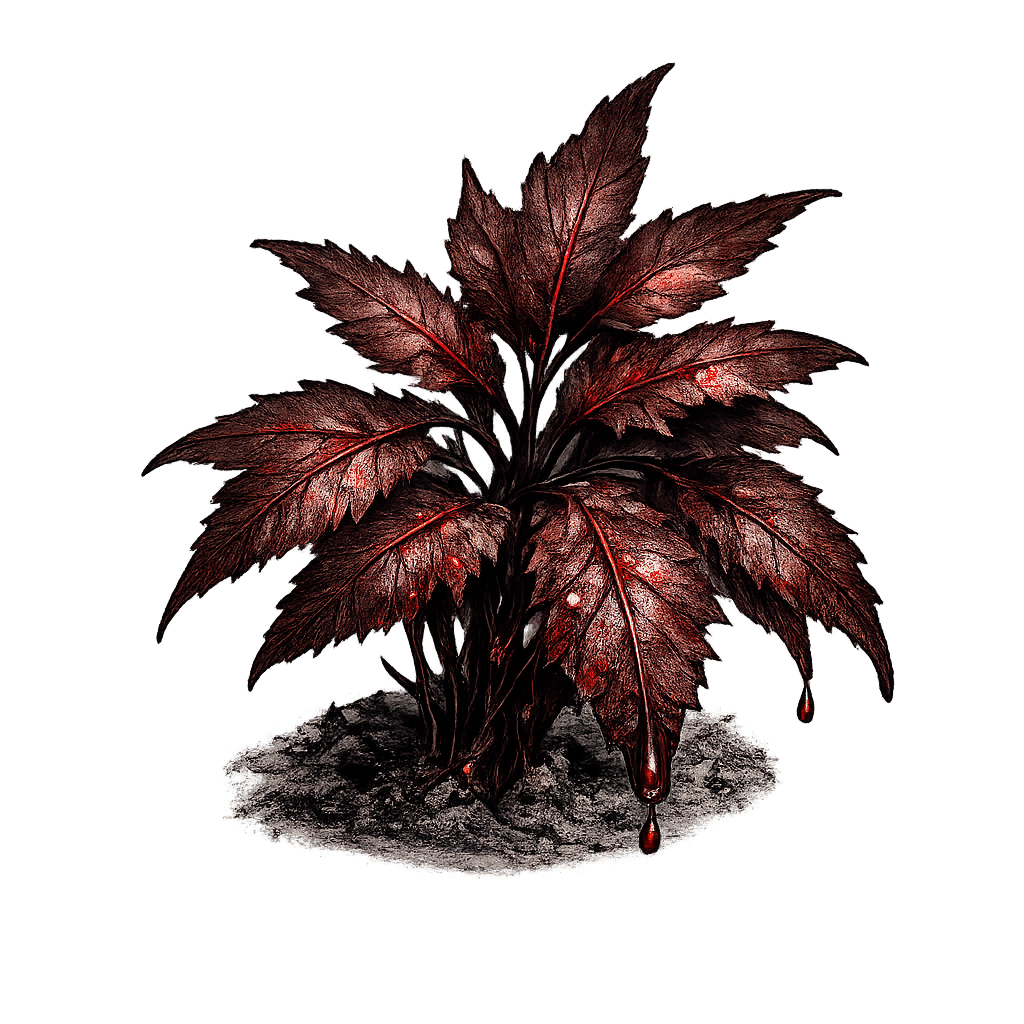
Bloodleaf is a rare and unsettling herb that grows only along Thresholds tied to the River of Ash and Bone, where death lingers close and the boundary between body and spirit runs thin. It is most often found rooted in ashen soil or among the remnants of decay, nourished not by sunlight alone, but by the residual essence of passing life.
Its leaves are dark and velvety, ranging from deep crimson to near-black, with faint veins that resemble branching blood vessels. When freshly gathered, the leaf surface appears almost wet, catching the light with a slow, viscous sheen, as though it has only just fed.
Properties
Bloodleaf is a plant of hunger made manageable.
It carries a natural affinity for blood essence, allowing it to bind, stabilise, and preserve it when combined in brews or preparations.
When handled, the leaves feel unnaturally warm, and some report a faint pulsing sensation beneath their fingertips.
Unlike Veilleaf, which resists the Veil, Bloodleaf embraces it, specifically the quiet pull of the River and its endless current of endings.
Use in The Crossroads
Bloodleaf is most commonly used in the brewing of Sanguine Tea, where its properties help:
Temper the intensity of vampiric hunger
Bind a small quantity of blood into a stable, consumable form
Allow controlled sustenance without the immediate need to feed
It is also occasionally used in ritual preparations tied to the River. Particularly those involving memory, death, or binding oaths through blood.
Harvesting & Handling
Harvesting Bloodleaf is not without risk.
It must be gathered from active Threshold sites, often in unstable or dangerous conditions.
The leaves are best cut cleanly. Tearing them can cause them to blacken and lose potency.
Prolonged contact with bare skin may induce unease, heightened thirst, or fleeting impressions not one’s own.
Warnings & Folklore
“A leaf that drinks without a mouth should never be trusted in excess.”
Overuse or mishandling can lead to:
Heightened blood craving
Restlessness or agitation
A creeping sense of being drawn toward the River’s call
Closing Note
Bloodleaf does not create hunger. It listens to it.
And in doing so, it teaches it how to endure.